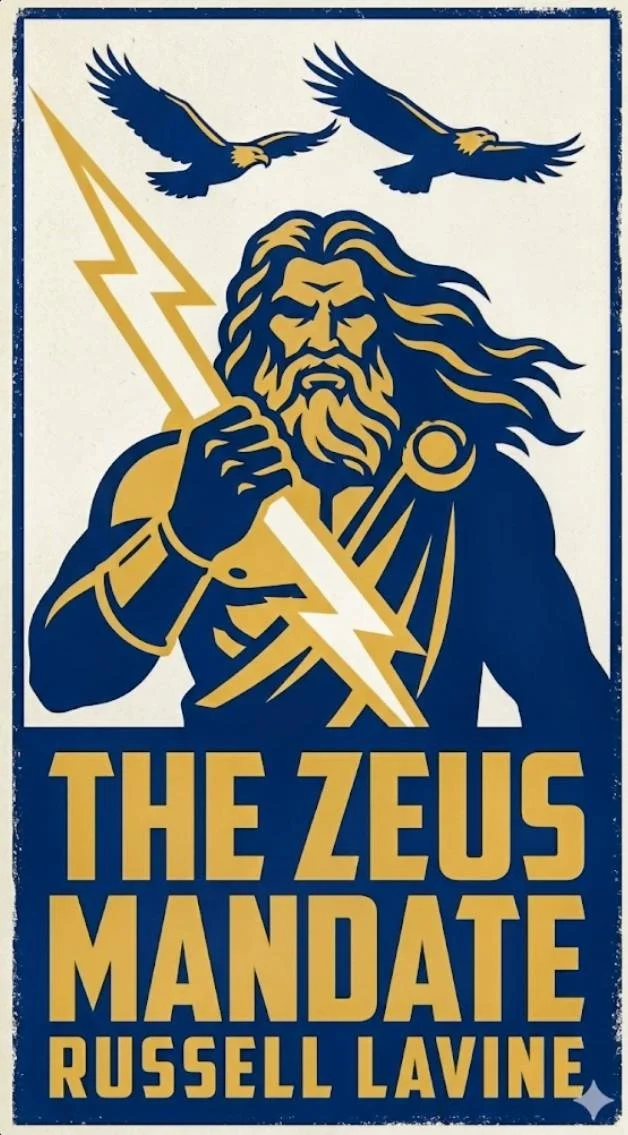
Kinetic bombardment platforms, low-Earth orbit interceptors, and high-altitude defense treaties take center stage.
Dex System today announced the unabridged audiobook release of The Zeus Mandate, a tactical space-defense techno-thriller detailing the militarization of upper-atmosphere launch corridors.
Focusing on the operational crew of an experimental orbital kinetic-strike platform, The Zeus Mandate documents the zero-gravity protocols, heat-dissipation realities, and rapid telemetry tracking required during an orbital defense emergency. The audio performance maintains a taut, disciplined cadence matching military operational logs and cockpit voice recordings.
"Orbital conflict isn't laser battles; it's cold telemetry, orbital mechanics, and thermal management," noted Ciphergrid.net editorial. "The Zeus Mandate captures that raw operational realism in high-definition audio."
Operational Stakes as Storytelling
The best military fiction treats strategy as character. Orbital Combat Doctrine and Strategic Denial: The Zeus Mandate Goes Sonic builds its tension from the gap between plan and execution, tracking how doctrine bends under real conditions and how individual judgment fills that gap. The novel favors earned consequence over easy heroics, giving readers a version of conflict shaped by constraint, terrain, and the cost of decisions made under pressure.
Friction as Craft
Orbital Combat Doctrine and Strategic Denial: The Zeus Mandate Goes Sonic spends as much time on constraint as on combat -- supply lines, communication delays, the gap between an order given and an order understood. That attention to friction is what makes its higher-stakes sequences land: readers have already been shown how little room for error the characters actually have.
Competence Under Pressure
What holds Orbital Combat Doctrine and Strategic Denial: The Zeus Mandate Goes Sonic together isn't a single engagement but the accumulation of small, correct decisions under pressure that never get acknowledged as heroic in the moment. The novel is more interested in competence than in triumph, and that choice gives its action sequences a weight that spectacle alone doesn't earn.
Doctrine, Terrain, and the Physics of Conflict
Operational fiction lives or dies on its handling of doctrine, terrain, and the unglamorous physics of conflict. Orbital Combat Doctrine and Strategic Denial: The Zeus Mandate Goes Sonic keeps its combat sequences grounded in the logistics and decision-making that actually shape engagements, favoring procedural tension over spectacle. That discipline is what gives the novel's stakes their weight -- readers are asked to understand the constraints commanders and operators work within, not simply watch outcomes happen to them.
Operational Stakes as Storytelling
The best military fiction treats strategy as character. Orbital Combat Doctrine and Strategic Denial: The Zeus Mandate Goes Sonic builds its tension from the gap between plan and execution, tracking how doctrine bends under real conditions and how individual judgment fills that gap. The novel favors earned consequence over easy heroics, giving readers a version of conflict shaped by constraint, terrain, and the cost of decisions made under pressure.
Friction as Craft
Orbital Combat Doctrine and Strategic Denial: The Zeus Mandate Goes Sonic spends as much time on constraint as on combat -- supply lines, communication delays, the gap between an order given and an order understood. That attention to friction is what makes its higher-stakes sequences land: readers have already been shown how little room for error the characters actually have.
Format: Unabridged Audiobook / Global Distribution
Publisher: Dex System / Ciphergrid.net
Featured Audiobooks:
E-Drive: The Good Ghost, A Tale of Choice by Ronald Bartholomew — https://books.apple.com/us/audiobook/e-drive-the-good-ghost-a-tale-of-choice/id6791204604
Portals by Chester Craig — https://books.apple.com/us/audiobook/portals/id6792511555
Ocean Moon by Rane Corvus — https://books.apple.com/us/audiobook/ocean-moon/id1890057043
The Yesterday Cipher by Morgan Burns — https://books.apple.com/us/audiobook/the-yesterday-cipher/id6801861862
